🍵 Which Matcha Should You Use?
Matcha can feel confusing at first… especially when you see words like ceremonial and culinary printed across every bag. But each grade has its own story — how it’s grown, how it tastes, how it costs, and what it’s best used for. Let’s make this super simple.
🌿 How Each Grade Is Harvested
- CEREMONIAL GRADE:
- Ceremonial matcha comes from the youngest, most tender leaves at the top of the tea plant.
- They’re shade-grown for about 3–4 weeks before harvest, which increases chlorophyll and creates that bright, vibrant green.
- After picking, the stems and veins are removed, leaving only the soft leaf interior.
- The result is a smooth, naturally sweet powder meant for sipping straight.
- CULINARY GRADE:
- Culinary matcha uses slightly older leaves.
- They’re still shade-grown, but not quite as delicately handled as ceremonial leaves.
- Because the leaves are firmer, they have a stronger taste.
- Perfect for baking, smoothies, and lattes where you need the flavor to shine through other ingredients.
🧪 Nutritional Differences
- Both grades come from the same plant, so the core nutritional benefits remain very similar:
- Antioxidants (including EGCG)
- L-theanine for calm focus
- Caffeine for steady energy
- Amino acids + chlorophyll
Ceremonial matcha tends to have slightly higher levels of L-theanine because of the younger leaves.
Culinary matcha can have slightly more antioxidants because older leaves contain more catechins… but the differences are minor. You’re basically getting healthy either way.
👀 Visual, Flavor, and Aroma Differences
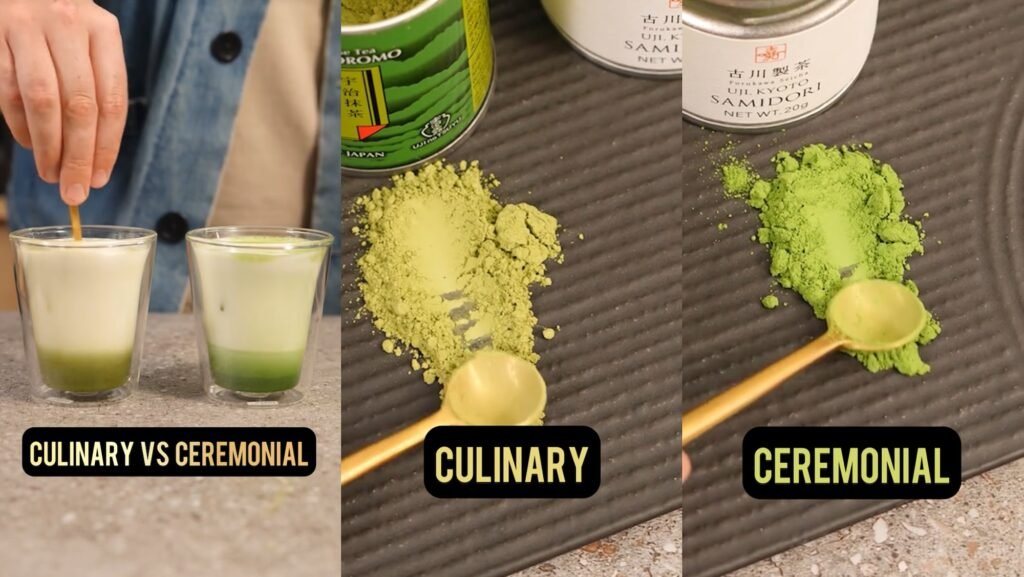
- CEREMONIAL:
- Color: Bright, vibrant, almost neon green
- Flavor: Smooth, natural sweetness, light umami
- Aroma: Fresh, grassy, delicate
- CULINARY:
- Color: Deeper green with a slight olive tone
- Flavor: Bold, slightly bitter, strong umami
- Aroma: Earthy, robust
When you whisk ceremonial, you’ll usually get a thicker, creamier froth. Culinary doesn’t froth quite as easily.
💸 Average Cost Difference
- Prices vary, but here’s an easy overview:
- Ceremonial: $25–$45 for 100g
- Culinary: $5–$25 for 100g
Ceremonial costs more because of the delicate harvesting, shading, and leaf selection. Culinary is more widely versatile, so it’s priced for everyday use.
What Each Type Is Best Used For
- Ceremonial Matcha is best for:
- Traditional hot matcha
- Iced matcha drinks where you want a smooth flavor
- Straight sipping
- Light lattes with minimal sweetener
- When you want the “premium” experience
- Culinary Matcha is best for:
- Matcha lattes with milk or cream
- Smoothies
- Baked goods
- Desserts
- Anything where matcha flavor needs to stand out
Culinary is also ideal for beginners who want great matcha without spending a lot.
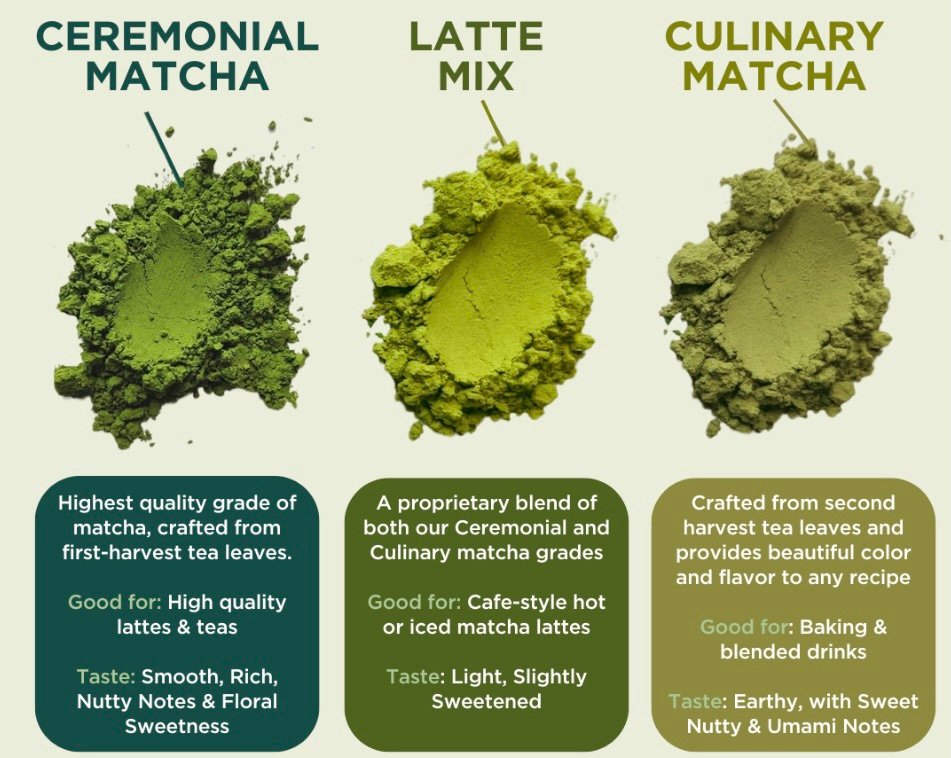
Why Mixing the Two Creates the Perfect Latte Blend
Many people don’t realize this… but most of the best matcha latte powders are actually a blend of ceremonial and culinary.
- Why? Because:
- Ceremonial gives sweetness, smoothness, and color
- Culinary brings bold flavor that stands up to milk
- Together they create a latte that is both flavorful and balanced — not too bitter, not too light
This combo keeps your latte bright green, rich, and satisfying without needing tons of sweetener.
If you’re making your own matcha at home, a 40/60 blend (culinary heavy) is my favorite ratio.